


Nearly Three Decades of Turning Ocean Stories into Ocean Action
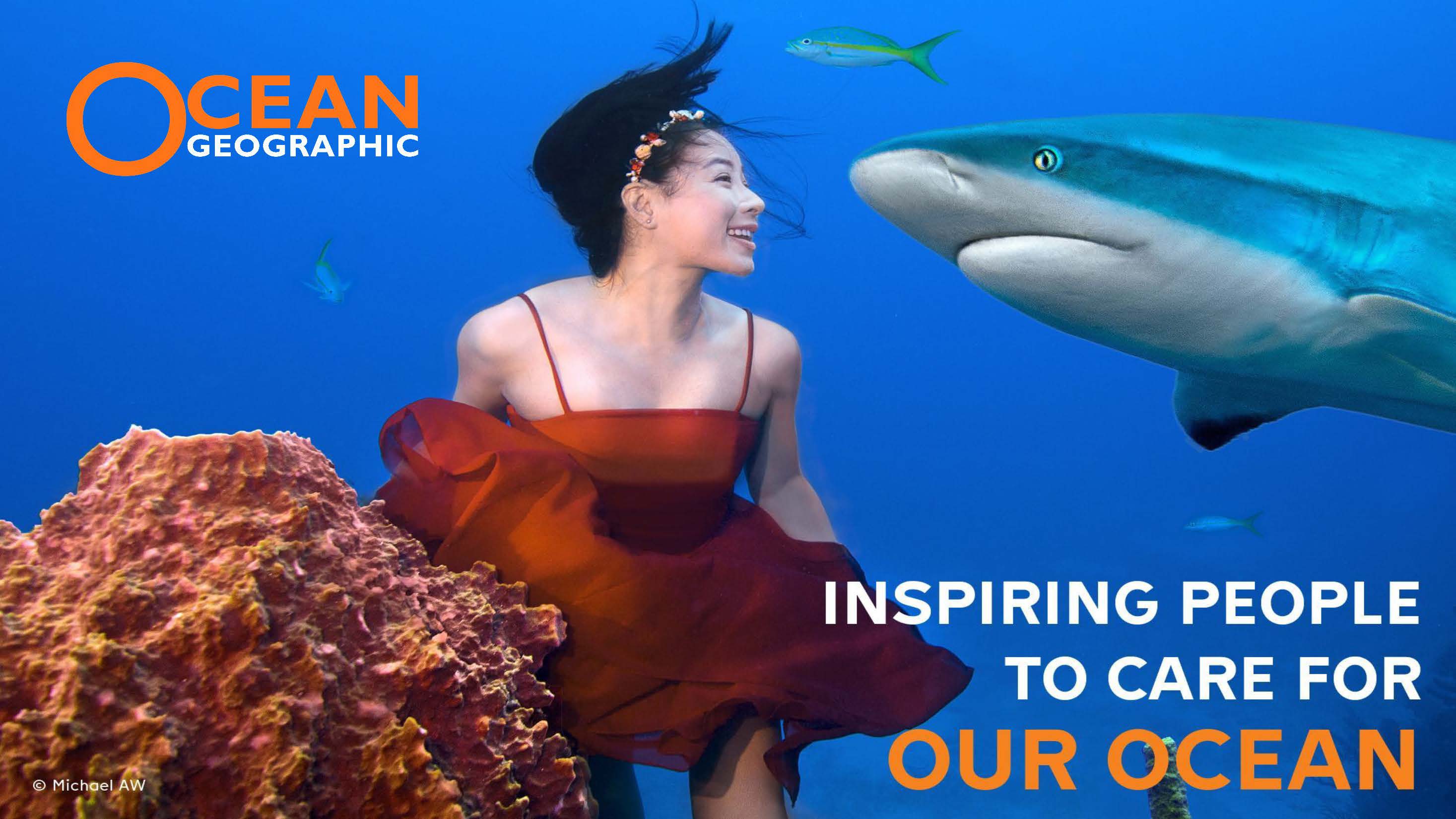
For nearly three decades, OceanNEnvironment Ltd and Ocean Geographic have worked to transform awareness into action—using science, exploration, photography, film and storytelling to inspire greater care for the ocean and the natural world.
Established in Australia in 1998 as a not-for-profit environmental organisation with charity status, OceanNEnvironment is chaired by internationally renowned coral scientist Dr Carden Wallace, with explorer, conservationist and wildlife photographer Michael AW serving as Executive Director. Its work has always combined direct conservation with public engagement—from supporting turtle conservation and hatchery programmes in Derawan and Sabah alongside the work of Dr Nicholas Pilcher, to monitoring the threatened Napoleon wrasse (Cheilinus undulatus) in the Maldives.
From the beginning, OceanNEnvironment recognised that conservation requires more than documenting what is being lost. It requires changing the way people see, value and ultimately protect the natural world.
In 1998, the organisation founded Asian Geographic, creating a platform to communicate the natural and cultural heritage of Asia. This was followed in 2002 by the launch of the Celebrate the Sea Festival, which became a travelling platform for ocean conservation and the No Shark Fins campaign across Asia. Between 2002 and 2018, the festival and its advocacy reached Singapore, Malaysia, the Philippines, Hong Kong, Brunei and Indonesia.
These campaigns went beyond awareness. OceanNEnvironment's advocacy contributed to significant changes in policy and corporate practice, including landmark shark-protection measures in Brunei, action against the shark-fin trade in North Sulawesi, and the movement that led Singapore Airlines to cease the carriage of shark fins as cargo.
In 2007, Ocean Geographic and the Ocean Geographic Society were launched with a defining mission: To inspire greater care for the ocean through the convergence of science and the arts.
Under the guidance of Dr Sylvia Earle, Chair of Ocean Geographic's Advisory and Editorial Board, the organisation has brought together an extraordinary international community of scientists, explorers, photographers, filmmakers, artists, conservationists and young people. Their collective purpose is not simply to showcase the beauty of the planet, but to use that beauty to create empathy—and use evidence to inspire action.
EXPLORATION WITH PURPOSE
OceanNEnvironment and Ocean Geographic have also pioneered ambitious expeditions designed to create visual and scientific time capsules of a changing planet.
The Elysium Shackleton Antarctic Climate Expedition in 2010, Elysium Arctic Expedition in 2015, and Elysium Coral Triangle Climate Expedition in 2018 documented the condition of some of Earth's most important and vulnerable ecosystems, establishing records against which future environmental change could be witnessed and measured.
In 2023, Ocean Geographic organised the Antarctic Climate Expedition, bringing together 120 participants and developing eight resolutions aimed at accelerating global action towards a sustainable, net-zero future.
In 2025, the organisation convened 98 Climate Avengers from around the world for an expedition into the High Arctic. Scientists, explorers, artists, filmmakers, business leaders, educators and young people travelled together to witness and document the transformation of one of Earth's most important climate systems—and to give a voice to the voiceless.
The resulting photographs, scientific observations, films, publications, exhibitions and educational programmes extend the impact of these expeditions far beyond the people who participate in them.
FROM WITNESS TO ACTION
Today, OceanNEnvironment and Ocean Geographic are preparing for an even more ambitious chapter. Their work is expanding from the melting glaciers of the Third Pole—the great water tower of Asia—to the remaining coral reefs of the Maldives, Red Sea and Coral Triangle. These initiatives will create enduring visual and scientific records of ecosystems undergoing profound change, while communicating one fundamental truth:
What happens in the most remote places on Earth does not remain there. Everything is connected.
The loss of a glacier can affect rivers, food production, communities and eventually the ocean thousands of kilometres away. The collapse of coral reefs threatens biodiversity, fisheries, coastlines, economies and human livelihoods. Protecting these ecosystems is therefore not simply an environmental responsibility; it is an investment in humanity's future.
This is where support for OceanNEnvironment and Ocean Geographic can make a measurable difference.
For almost three decades, these organisations have demonstrated an ability to bring together science, exploration, conservation, education, visual storytelling and advocacy—and transform them into public awareness and tangible action.
They are now seeking visionary corporations, foundations, philanthropists and individuals who share the belief that the greatest legacy of this generation should not be a record of what was lost, but evidence of what it chose to protect.
Supporting OceanNEnvironment and Ocean Geographic is therefore more than sponsorship.
It is an investment in evidence.
An investment in education.
An investment in influence.
An investment in action.
And ultimately, an investment in the living planet inherited by generations yet to come.
OceanNEnvironment Ltd | Ocean Geographic